

Customization Options for Blanchard Grinders
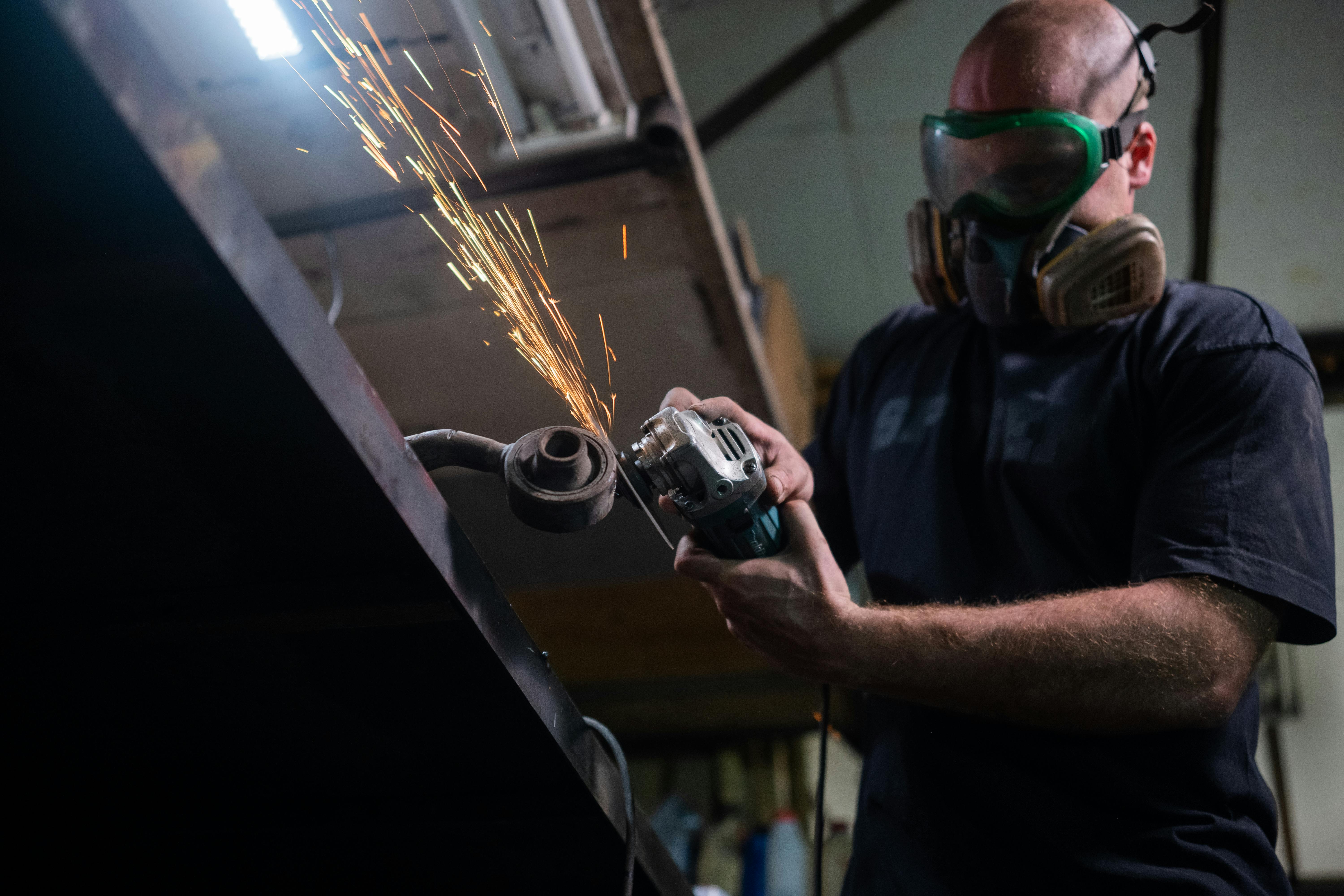
Blanchard grinders are a type of rotary surface grinder designed to quickly remove large amounts of material from flat surfaces. Some machines grind surfaces to tight tolerances, enabling manufactured pieces to fit accurately in their desired applications. Used grinders at Vander Ziel Machinery can be utilized for plate stock, large castings, stampings, and forgings. Here are some customization options for Blanchard grinders:
Wheel Selection
The grinder's wheel rotates against the workpiece, or the material that is being ground, acting as a large sanding block. The abrasive on the wheel and the grit size can be customized to suit the workpiece. This allows manufacturers to achieve a desired finish.
When customizing a wheel, review the workpiece's key properties, including its hardness, whether it's ferrous or non-ferrous, and how easy it is to grind. For ferrous materials, aluminum oxide abrasives may be used, while silicon carbide is often preferred for grinding non-ferrous materials. Coarse grits withstand long grinding times for easy-to-grind workpieces, and a mild grain stays sharper for pieces that are more difficult to grind.
Grinding wheels can achieve finishes quickly and consistently, allowing for the repetition of the process across multiple workpieces. Projects that require rapid stock removal may necessitate a different wheel type than those needing a finer finish. Coarse grits grind materials more quickly, improving stock removal times. A finer grit helps achieve low surface roughness averages (RA) and creates a shallower scratch pattern.
Operation Settings
Adjusting a grinder's settings affects its operating efficiency and the final finish on the material. This allows manufacturers to tailor a workpiece to suit various applications. Here are some customizable settings on a grinder:
- Speed: On Blanchard grinders, the speed at which the grinding table rotates impacts material removal and surface finish. At slower speeds, the grinding wheel often exerts a higher force, causing abrasive grains to break down faster. Higher speeds can extend the life of the grain as it is less likely to break.
- Load Balancing: The way parts are arranged on the grinder table affects the grinding process. When the rotating table is well-balanced, grinding is often more efficient. If there is too much weight on the grinder table, cuts can be hard or sluggish.
- Motor Load: The motor load is the amount of electrical power consumed by the grinding motor. Some machines measure the percentage of load, while others indicate the amperage. Grinders designed to run at high motor loads maintain operating efficiency without decreasing the wheel's rotational speed.
Machine Specifications
Blanchard grinders are available in various specifications, including differences in size, vertical range, and horsepower. On a grinder, the chuck, or clamping device, holds the workpiece in place while the machine is running. A machine's chuck size determines the diameter of compatible workpieces. Standard chuck sizes include 30, 48, 60, and 84 inches. Smaller grinders with 12-inch chucks and large machines with 100-inch chucks are also available. The vertical range is the maximum distance the grinding wheel can move vertically. This adjustable distance enables a machine to grind materials of varying thickness.
Since grinders are designed to remove a significant amount of material, a high horsepower is necessary to drive the wheel and rapidly cut through metals and other materials. When cutting large or heavy workpieces, high horsepower helps maintain speed and performance. If the machine is underpowered, there may not be enough force to grind a piece evenly, resulting in grain dulling or surface burns.
Bond and Coolant Options
In a grinding wheel, bonds hold the abrasive grains together to form the cutting surface. They give the wheel's surface varying levels of structure and strength. Here are some common bond types:
- Vitrified: These bonds are made from ground clay and fluxes, creating a strong, rigid adhesive. They remain strong at high temperatures and do not degrade when in contact with oil, water, or acids.
- Resinoid: Made from synthetic resins, these bonds are designed to withstand high grinding speeds.
- Metal: Metal bonds are used to bind diamond abrasives that are required for grinding hard materials like glass, quartz, or ceramic.
- Rubber: These flexible bonds are used when smooth finishes are required, as they can produce tight tolerances.
- Silicate: Silicate bonds release abrasive gains easily, minimizing the thermal energy produced during grinding.
During operation, coolants are used to cool and lubricate the grinding wheel and workpiece. This helps prevent thermal damage and maintain the wheel's structural integrity. Water-based coolants decrease thermal energy in the grinding zone and wash away debris to keep the wheel clean. Oil-based coolants provide high lubrication and improve surface finish. Coolants may also affect the performance of the wheel's bond. Thermal energy allows resin-bonded grinding wheels to self-sharpen, so using a coolant prevents the wheel from breaking down. When using vitrified bonds without coolant, increased thermal energy could burn the workpiece's surface.
Shop Used Blanchard Grinders Today
Blanchard grinders are a key machine when workpieces require significant material removal before final production specifications can be met. A range of machine specifications, from wheel and bond options to operation and machine specifications, enables grinders to adapt to various materials. Vander Ziel Machinery offers high-quality used grinders in multiple sizes to meet your project requirements. Contact us today to learn more.