Questions to Ask When Buying Used Metalworking Machinery
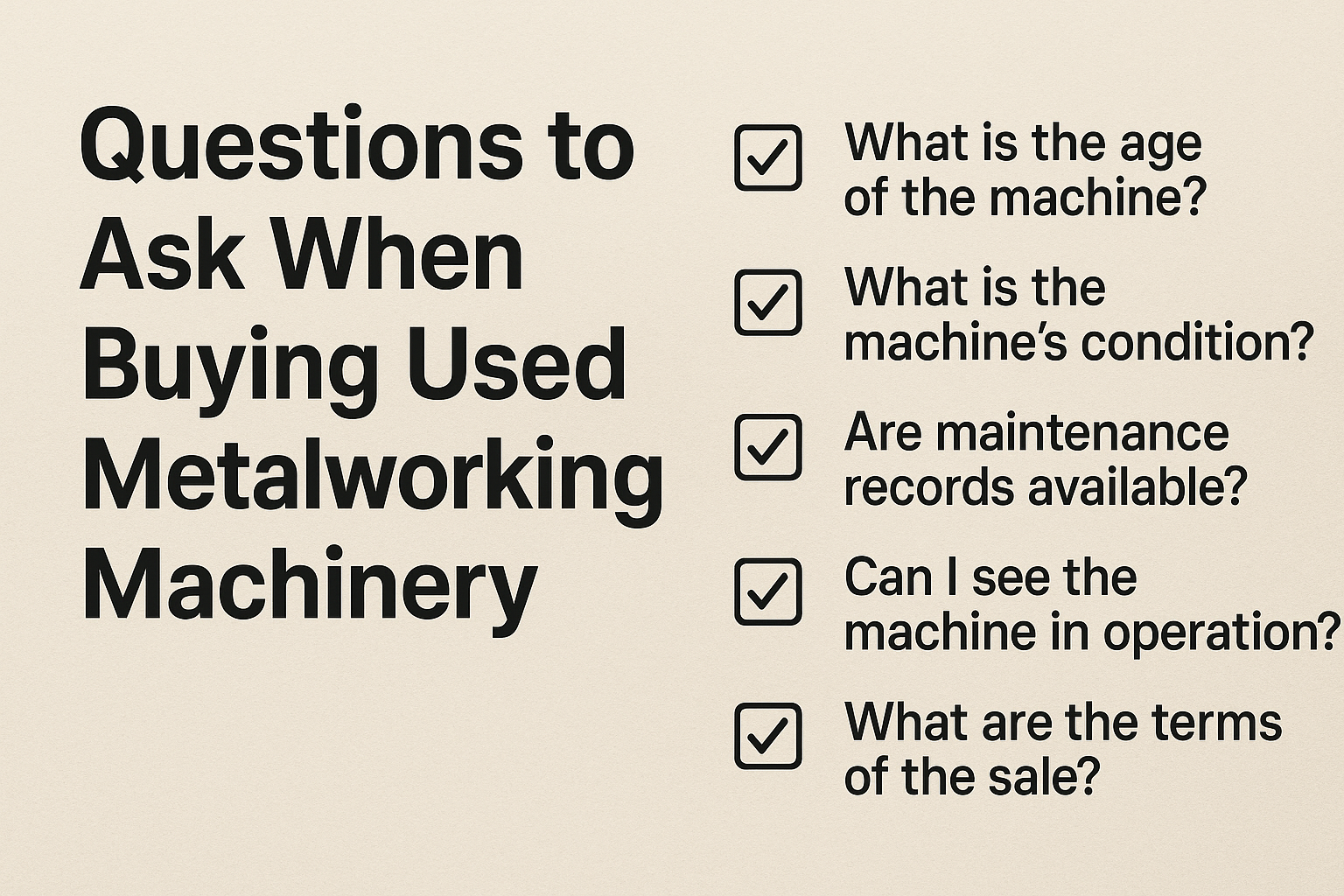

Used machinery dealers offer a way to expand manufacturing capabilities. Whether for a small fabrication shop or a large industrial facility, pre-owned machines provide high-quality equipment at reduced costs. At Vander Ziel Machinery, we help businesses find reliable equipment that fits their needs and answer all their questions. Here are some questions to ask when buying used metalworking machinery:
What Is the Machine's History?
Before investing in pre-owned machinery, it is key to understand its background, use, and history. This includes information about its location, the type of work it performed, and the number of operating hours. This information provides insight into how heavily the machine was used. Frequently used machines may not be suitable for heavy-use applications. Be sure to ask used machinery dealers whether the machine was used for light-duty or heavy-duty operations to determine if it will meet your needs in the short or long term.
Has the Machine Been Regularly Maintained?
Maintenance history is key when evaluating used equipment. Regular maintenance can mean a machine is in good condition and has working components. If it is regularly maintained, signs of malfunction or issues are likely to be caught early. Maintenance logs or service records should provide details about the parts that have been replaced. Ask for available information on past upgrades or if any modifications have been made. A well-documented history indicates that the equipment was properly cared for.
Observing the machine in operation and listening for unusual noises helps confirm that the machine is in good working order. Watch for any vibrations or hesitations to check the quality of the output. At Vander Ziel Machinery, our team inspects and tests equipment before listing it online to make sure it is reliable. We also take videos of each machine in operation and offer a 30-day return policy.
What Is the Machine's Condition?
At Vander Ziel Mahincery, we thoroughly examine each machine for quality and reliability. Our team assesses each piece of equipment for its overall condition. This includes air compressors, brake presses, or drill-radial machines. Here are some things we look for when checking the machine's condition:
- Excessive wear and tear on moving parts
- Rust or corrosion
- Leaks or residue around the seals and gaskets
- Damage to the electrical components or wiring
What Are the Machine's Specifications?
A machine's specifications should match your project's needs. This includes factors such as capacity and size range, as well as spindle speed, workplace size, tonnage, and more. Check the voltage and phase if you have specific power requirements. Control systems may include a manual, CNC, or digital readouts. Be sure to review the tooling compatibility to verify the equipment will integrate well with your existing setup.
What Should I Know About Machines?
When choosing equipment, such as lathes, it is key to review the availability of parts. Press brakes, surface grinders, or drill presses are designed for precise jobs and have distinct purposes. Here are some things to review when evaluating specific equipment types:
- Press Brakes: These machines bend sheet metal with precision and may be found in fabrication shops. They should have a solid frame, responsive controls, and consistent bend accuracy. When evaluating press brakes, check whether they use mechanical or hydraulic operation, depending on your needs.
- Surface Grinders: Surface grinders add a smooth finish to flat surfaces. Inspect the machine's spindle condition and table movement. A well-maintained grinder offers clean finishes, which is key for tool and die work.
- Drill Presses or Radial Drills: These machines offer precise hole drilling in a variety of materials, including steel and cast iron. Review their spindle travel, table size, and the machine's capacity to handle different diameters and depths. Look for stability and alignment for clean, accurate drilling.
- Lathes: Lathes offer operations such as turning, threading, and facing. These machines must be rigid to provide smooth carriage movement with a reliable spindle. When choosing this machine, review the swing capacity, bed length, and tooling compatibility.
- Air Compressors: Air compressors generate compressed air, which is then used to operate pneumatic tools and equipment. This includes air drills, impact wrenches, or sandblasters. When inspecting, check for quiet operation and consistent pressure output. Review the tank to make sure it is leak-free.
- Milling Machines: Milling machines shape and contour metal and require tight tolerances. Be sure to review the machine's table movement, spindle speed range, and whether it offers digital readouts. At Vander Ziel Machinery, our team also reviews and offers aid when inspecting machines.
Used Machinery Dealers at Vander Ziel Machinery
Investing in used metalworking machinery can help provide access to high-quality equipment. Review items such as grinders, ironworkers, lathes, and more. At Vander Ziel Machinery, we have over 900 used machines in stock. Our team acquires trade-ins, excess machinery from other customers, manufacturer seconds, and more. Explore our warehouse and inventory, and our team will answer any questions about the equipment. Contact us today to get started and find the machine that fits your needs.