

Troubleshooting Common Issues With Blanchard Grinders
Troubleshooting Common Issues With Blanchard Grinders
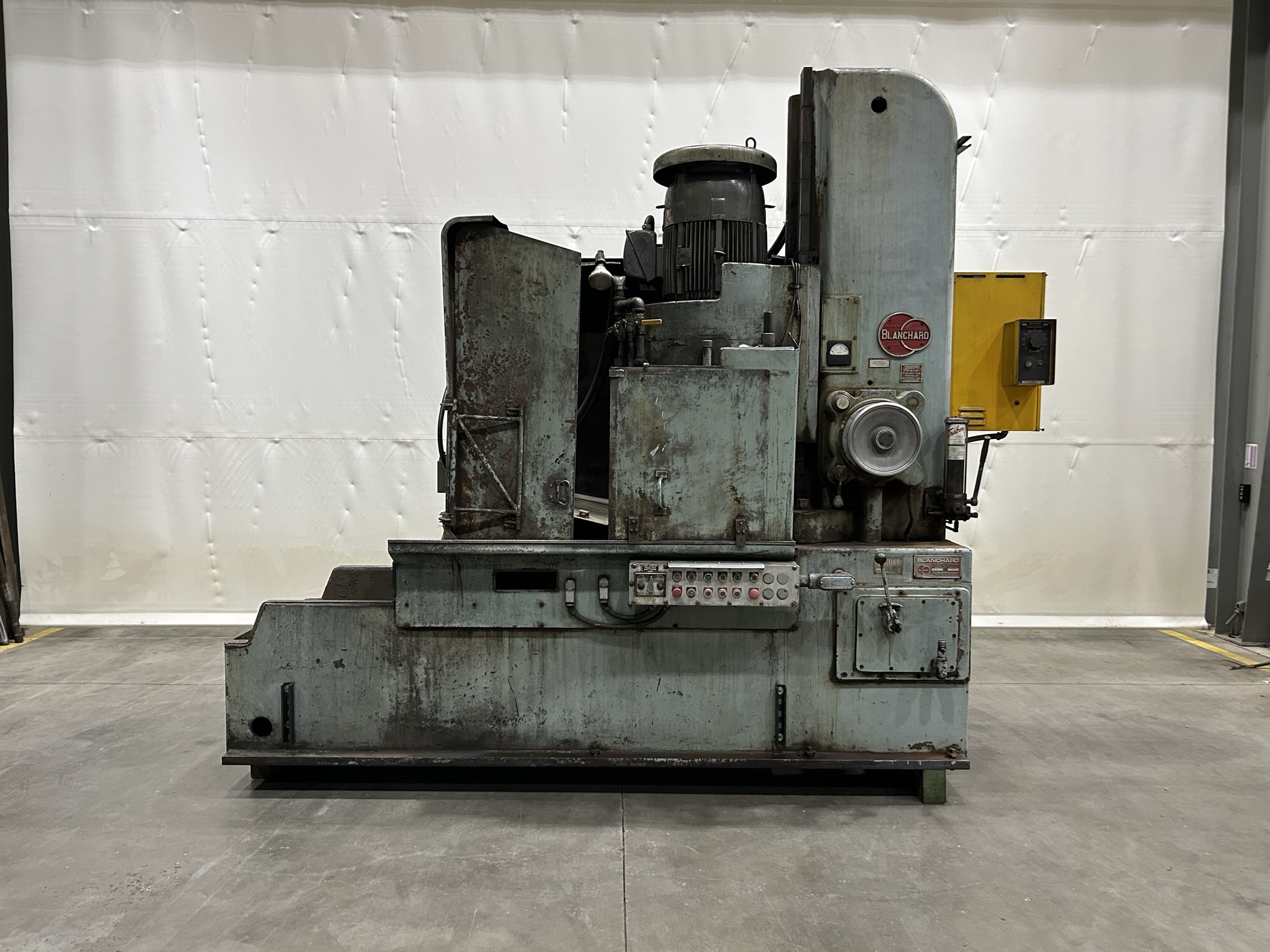
Blanchard, or rotary surface, grinders are designed to quickly remove materials from a large surface area to create a flat, level surface. The grinder’s precision makes this machine ideal for part development in many industries. Vander Ziel Machinery offers new and used grinders in various sizes, making it easy to find one that meets your needs. Here are some common issues with Blanchard grinders and how to troubleshoot them:
Uneven Grinding
A properly functioning Blanchard grinder creates a flat surface with a distinctive cross-hatch pattern. The workpiece, or the material that was ground, should not have bumps, bends, or dips. A grinder usually produces a finish with high precision tolerance, enabling the workpiece to fit accurately in the desired application. Variations in a grinder’s finish impact a part’s compatibility with further processing requirements. Uneven grinding may be caused by:
- Machine misalignment: The machine’s base should be level, and the grinding head must be adjusted for accuracy. Use a machinist’s level and rotate the wheel until the surface is aligned. The chuck, or clamping device, should also have a flat surface to maintain grinding consistency.
- Damaged spindles: A damaged spindle can cause radial or axial runout, which offsets the machine’s rotation and creates a non-level surface finish. Replacing the spindle or bearings helps resolve these issues.
- Wheel wear: Grinding wheels wear down over time, impacting performance. Regular wheel dressing removes dull abrasive grains to expose sharp ones to improve cutting ability. Long-term use may require wheel replacement.
- Grinding technique: The workpiece should be securely attached to the machine to prevent vibration or movement during grinding. Magnets can be used on metal pieces to reduce bowing, verifying an even finish. Workpieces that are well-balanced on the machine support efficient grinding.
Poor Surface Finish
Wheel selection is a key factor in determining the surface finish produced by Blanchard grinders. The wheel’s grit type, size, and how abrasives are bonded all impact the materials with which they are compatible. Aluminum oxide abrasives are used for grinding ferrous workpieces, while non-ferrous workpieces usually require silicon carbide abrasives. Coarse grits remain durable for long grinding times on easy-to-grind pieces, and mild grits stay sharp on harder-to-grind surfaces.
Bonds hold abrasive gains on the wheel and form the machine’s cutting surface. Metal bonds are typically used to attach diamond abrasives for grinding materials such as ceramic, quartz, or glass. Flexible rubber bonds help produce smooth finishes and tight tolerances. Resinoid bonds remain intact with high grinding speeds, helping maintain a level surface finish.
Reviewing a workpiece’s properties, such as its hardness and whether it’s ferrous or non-ferrous, helps determine a compatible wheel type. The grinding speed also impacts grit selection, as coarse grits remain sharp at high speeds, improving stock removal rates. Finer grits are designed to provide a lower average surface roughness.
Excessive Noise
Excessive or unusual noise during grinder operation often indicates underlying issues with the machinery. Common causes of increased noise include an imbalanced wheel or misaligned components. A balanced wheel should spin smoothly without vibration. To verify that it is properly mounted, make sure it is flush with the chuck, level, and concentric with the spindle. If the wheel continues to vibrate during operation, mount weights on the wheel to balance its heavy spot.
A vibrating grinder wheel may cause other parts to become misaligned. Some parts that commonly become misaligned include:
- Grinding head: The grinding head holds the wheel, and it could become misaligned wth the axis or chuck. This results in poor surface finish, increased wheel wear, and workpiece burning. Many grinders have adjustment screws that can be tightened or loosened to improve performance.
- Rotary table: The table that holds and rotates the workpiece might become misaligned with the path of the grinding head. This prevents material from being removed evenly across the workpiece. Cleaning the table removes debris that causes workpieces to sit unevenly on its surface.
- Dresser assembly: The dresser is used to shape and prepare the grinding wheel, and this can become misaligned with the wheel’s axis. This reduces grinding efficiency and causes wheels to wear out more quickly. Cleaning the dresser and mounting surfaces helps verify a stable alignment.
Neglected Maintenance
Regular maintenance, including cleaning, lubrication, and machine inspection, prevents many common issues. Removing chips and other debris from the grinding wheel after each project helps reduce unnecessary wear. Daily inspections can reveal signs of damage or loose parts. Addressing these quickly verifies that finished workpieces meet expectations for surface leveling. Lubricate moving parts according to the manufacturer’s recommendations to provide a smooth operation for the components.
Shop Blanchard Grinders Today
Blanchard grinders are key for part preparation and surface finishing in many industries, including automotive, agriculture, and construction. They produce highly accurate and uniform parts, making it easy to replicate components quickly. Vander Ziel Machinery tests each used grinder and verifies its quality and reliability. We offer both compact units and large-capacity models to accommodate various projects. Contact us today to learn more.